Every year, World Environment Day rolls around like a reminder—a soft knock at the door asking, “Hey, are we doing enough?”
Most of us reply with a hashtag or a well-intentioned gesture—switching off lights more consciously, planting a sapling, skipping plastic for a day. It’s a start, but let’s be honest—it’s just the tip of the iceberg. Sustainability isn’t only about green choices. It’s not just hugging trees, wearing organic cotton, or patting yourself on the back because you remembered your tote bag.
Don’t get me wrong—I believe in these small steps. I live them! But over the years, I’ve come to understand that sustainability is much deeper, grittier, and more personal. It’s not a trend—it’s a value system. An everyday practice that shows up in the tiniest actions and the biggest decisions.
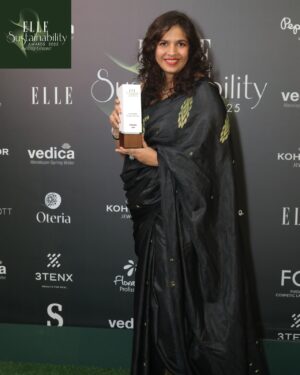
And this year, that belief was reaffirmed in the most heartfelt way—at the Elle Sustainability Awards 2025, where I was honoured as the Sustainability Design Advocate.
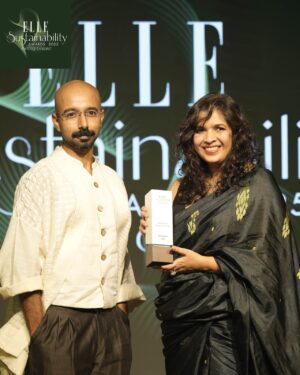
That evening wasn’t just about applause. It was about alignment. People from dramatically different worlds—actors, entrepreneurs, designers, scientists—stood together, bound by a shared truth: we care.
And by “care,” I don’t mean polished campaigns or greenwashing. I mean something raw and real. Genuine intent- thoughtful action. Some loud, many quiet—but all deeply powerful.
What struck me most wasn’t the glamour (though let’s be honest, it was a stunning crowd). It was the sheer range of what sustainable living looked like. It wasn’t boxed into fashion or climate tech. It spilled beautifully into cinema, skincare, architecture, public art—even silence. Every awardee brought a different lens, reminding us: sustainability isn’t a formula—it’s a living spectrum.
Let’s take Bollywood, for instance.
Yes, the industry often known for excess and spectacle. But that night, I saw its quiet revolutionaries—conscious, compassionate, and committed.
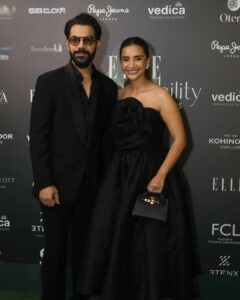
Rajkummar Rao and Patralekhaa—what a power couple. They don’t need to declare themselves as activists. Their choices do the talking. Whether it’s the roles they take, the causes they support, or the conversations they hold, there’s authenticity in how they show up. That’s something I deeply relate to. Sustainability isn’t always loud—it can be a gentle refusal, a subtle shift, a consistent choice.
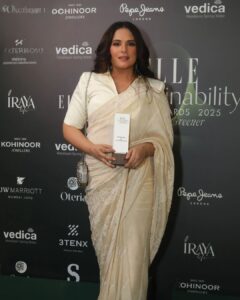
Richa Chadha—she’s never been just an actress. She’s a storyteller with spine. At the awards, she was recognised for her ability to support cinema that provokes, questions, and disturbs in the best way possible like Masaan. Off-screen, Richa mixes bold beliefs with bold fashion. She actively promotes vegan, cruelty-free, and thrifted fashion—calling out fast fashion’s impact on the environment, while showing that sustainability and style can go hand in hand. But more than her wardrobe, it’s her clarity—her refusal to stay silent—that sustains truth in public discourse.
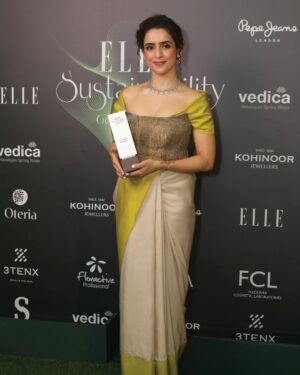
Sanya Malhotra, with her quiet strength, has brought real-world characters to life in Dangal and Pagglait, spotlighting lived experiences often overlooked. That’s sustainability in empathy—aligning cinema with lived realities.
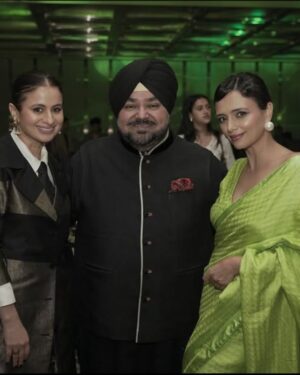
Rasika Dugal—her presence reminds me of a still forest. Not loud, not forceful, but unforgettable. Her roles linger. Off-screen, Rasika bridges heritage with modernity through her lifestyle. She champions handmade, upcycled, and artisan-first brands. Her wardrobe reflects her values, often spotlighting handloom and sustainable labels—not just as fashion, but as cultural memory.
And then there’s Dia Mirza—a name that’s been synonymous with mindful living long before it became fashionable. She isn’t just an actor—she’s the UN Environment Goodwill Ambassador for India, Secretary-General’s Advocate for Sustainable Development Goals, and a global voice for wildlife protection.
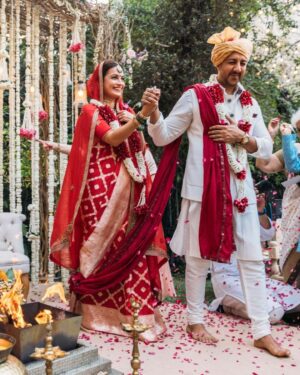
Her personal life, too, has become a mirror of her values. Dia hosted one of Bollywood’s first sustainable weddings in 2021 and earlier this year, she organised her son birthday party in their garden sanctuary with upcycled banners, bamboo cutlery, reusable crockery, and tree-plant return gifts—explained as a “zero waste, zero plastic” event. Whether she’s addressing global audiences or simply living her daily life with consistency and sincerity, Dia doesn’t talk sustainability—she embodies it. And that grace speaks louder than any slogan.
What the Elle Awards did this year was profound—they expanded the definition of sustainability. And we needed that.
For too long, sustainability has been squeezed into two boxes: eco-activism or slow fashion. But true sustainability? It’s layered. It shows up in heritage. In technology. In emotional labour. In discomfort. In design. In storytelling.
When JJ Valaya revives heirloom scraps in couture, he’s not just making garments—he’s preserving history.
When Studio Medium turns discarded textiles into public art, they’re not just beautifying spaces—they’re creating emotional memory.
When Chirag Nakrani makes solar power accessible, he’s not just innovating—he’s democratising energy.
When Prachi Bhandari and Aman Mohunta build a skincare brand like Aminu that honours science and sustainability equally—they prove that beauty doesn’t need to cost the earth.
In each of these stories, I saw something that resonated with my own practice.
As an artist Bandana Jain, I often say I work with “second chances.” Corrugated cardboard—often discarded, dismissed—is my primary medium. But I don’t see waste. I see memory. Cardboard has witnessed packaging, movement, consumption, chaos. I don’t “use” it—I listen to it. And then, I shape it into something meaningful.
To me, sustainability is that: seeing life where others see a dead end. It’s in the repair. The reuse. The rethinking. The courage to say—this can be enough.
I often tell people: sustainability is a muscle. The more you use it, the stronger it gets.
You don’t need to be an award-winning designer or a climate scientist to build a sustainable life. You can begin with small, powerful questions:
“Do I need this?”
“Can I reuse that?”
“Can I support someone local?”
“Can I repair instead of replace?”
These aren’t just questions. They’re seeds. Seeds that grow into habits, habits into values—and values shape everything.
Sustainability is rarely convenient. It asks you to be uncomfortable. To pause. To resist. To say no when the world says yes.
We think change is a revolution. But often, it’s in the smallest shifts—when we pause before buying, when we listen instead of react, when we choose presence over excess.
World Environment Day came and went. Many planted trees, posted photos, quoted Greta Thunberg. All good things.
But now, the real work begins.
Because sustainability doesn’t end on June 5—it begins again every morning after.
It’s not a checklist. It’s a practice. And I’m still learning. Still unlearning. Every single day.
To the trailblazers at the Elle Awards—thank you for showing us that change doesn’t have to be loud or perfect. It just has to be intentional.
Here’s to the quiet heroes.
To the actors who choose meaning.
To the designers who choose purpose.
To each of us, choosing a better tomorrow—one imperfect step at a time.
Let’s honour it.
Every day- In every way.